How local voices are shaping modern communication, technology, and AI
A voice note travels faster than a letter ever did.
A chatbot answers before a human can.
An AI system listens, transcribes, responds.
But here’s the quiet question behind all of it:
Whose language is the technology listening to?
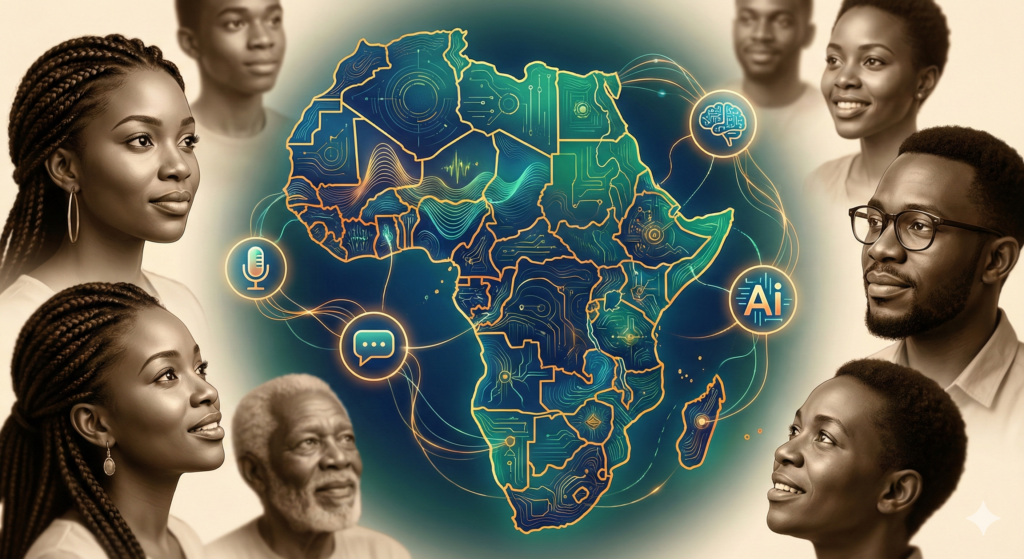
Across Africa, millions of people communicate digitally every day through calls, messages, audio notes, apps, and platforms. Yet the languages they use at home, in markets, and in communities are often missing from the systems built to serve them.
As Africa becomes more connected, the role of language in technology is no longer cultural alone—it’s foundational.
Africa Is Already Digital — Just Not Fully Heard
From WhatsApp voice notes in Lagos to mobile banking prompts in Nairobi, digital communication is woven into everyday African life. People switch between languages, mix tones, borrow words, and adapt speech depending on context.
This isn’t a future scenario. It’s already happening.
But many digital tools still rely on a narrow set of global languages, leaving vast communities underserved. When systems fail to recognize accents, tones, or local expressions, communication breaks down—not because people aren’t speaking clearly, but because technology isn’t listening well enough.
Where Language Meets Technology
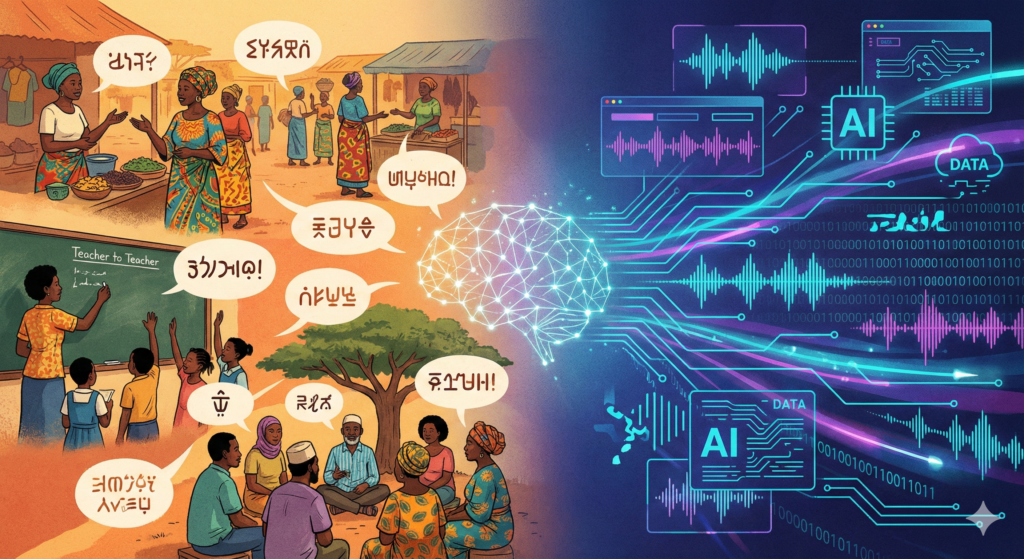
Every modern digital system that “understands” humans depends on language data:
- Speech recognition
- Audio transcription
- Machine translation
- Chatbots and virtual assistants
- Search and voice-driven tools
For African languages, this comes with unique challenges:
- Tonal meaning (where pitch changes meaning)
- Strong regional accents
- Code-switching between languages
- Rich oral traditions with fewer written datasets
Technology doesn’t automatically understand this complexity.
It has to be taught—carefully, accurately, and locally.
Why African Languages Matter in AI
AI systems learn from examples.
If a language isn’t present in the data, it becomes invisible to the system.
That invisibility has consequences:
- Misinterpretation of speech
- Poor transcription quality
- Exclusion from digital services
- Bias in automated decision-making
African languages are not “low-resource” by nature. They are under-represented because they’ve been under-collected.
Fixing this isn’t just a technical task—it’s a human one.
The Role of Native Speakers and Local Context
No algorithm can replace lived understanding.
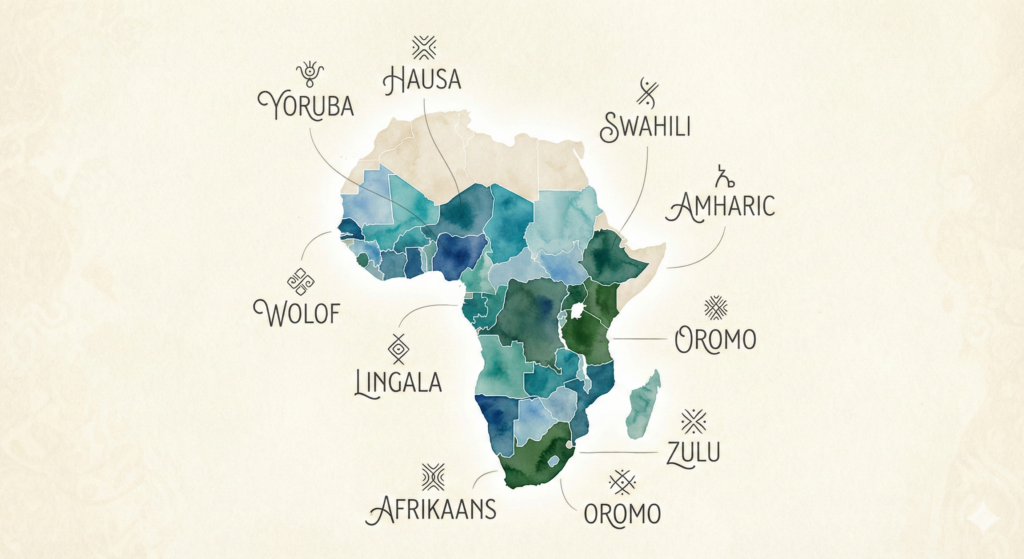
Accurate language technology requires:
- Native speakers who understand nuance and tone
- Cultural context behind words and expressions
- Human-in-the-loop systems that validate and refine data
This is especially true for audio data—where pronunciation, rhythm, emotion, and accent all matter.
When language work is done close to the source, technology becomes more accurate, fair, and useful.
Bridging the Gap: From Local Voices to Global Systems
Across the continent, structured efforts are underway to ensure African languages are properly represented in digital systems.
This includes:
- Translation and localization of content
- Audio transcription across multiple African languages
- Linguistic data annotation for AI training
- Community-driven language data collection
At FYTLocalization, this work is ongoing—supporting organizations by connecting technology with real speakers, real accents, and real linguistic knowledge from across Africa. The focus isn’t just scale, but accuracy, speed, and cultural relevance.
Looking Ahead
Africa’s linguistic diversity is not a barrier to digital growth, it’s a strength.
As technology becomes more voice-driven and AI-powered, the future will belong to systems that understand people as they truly speak, not as simplified versions of global norms.
African languages are already shaping how people connect, trade, learn, and share information.
The digital age isn’t changing that, it’s amplifying it.
The real question is no longer whether African languages belong in modern technology.
It’s how well we choose to build with them.
Building Language-Ready Systems for Africa’s Digital Future
As technology becomes more voice-driven and AI-powered, one thing is clear:
systems perform best when they understand people as they truly speak.
Across Africa, millions communicate daily in diverse languages, accents, and tones. Yet many global platforms still struggle to process African speech accurately—especially at scale.
This is where the right partners matter.
At FYTLocalization, we support organizations building, training, and scaling language-dependent systems by providing:
- Large-scale audio transcription across African languages
- Translation and localization grounded in cultural context
- Human-in-the-loop data annotation for AI and ML systems
- Access to a distributed network of native speakers across the continent
Our teams work across widely used and underrepresented African languages—handling high-volume projects efficiently, accurately, and on deadline.
Whether you’re:
- Training AI models
- Expanding digital services into African markets
- Localizing content for real-world impact
- Or building inclusive language technology
We help turn local voices into reliable, high-quality data.
If your next project requires scale, speed, and linguistic accuracy across Africa, let’s build it together.
👉 Reach out to explore collaboration or discuss upcoming language and data needs.