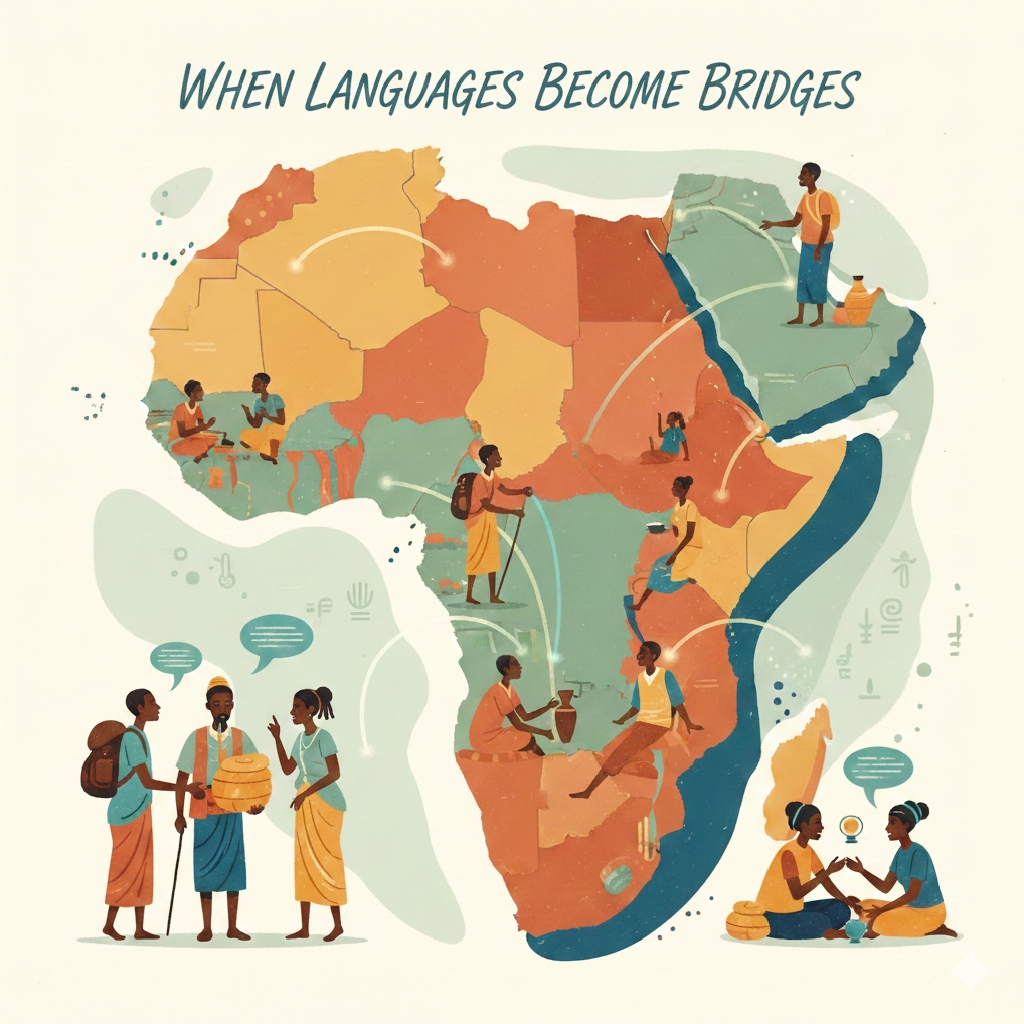
How Africa learned to speak across difference
On a busy market morning in Kano, a trader from Niger bargains with a buyer from southern Nigeria. Hundreds of miles away, on the streets of Mombasa, a fisherman chats effortlessly with a tourist from Uganda. They don’t share ancestry. They don’t share hometowns. Sometimes, they don’t even share borders.
Yet they understand each other.
This is one of Africa’s quiet superpowers.
Africa is often described as the most linguistically diverse continent on Earth, with over 2,000 languages spoken across its vast landscape. But diversity alone doesn’t explain how daily life works. How do people trade, travel, negotiate, teach, preach, and build community when their mother tongues differ?
The answer lies in Languages of Trade, also known as lingua francas—languages that rise not by force, but by usefulness.
Because in Africa, language doesn’t just divide.
It connects.
What Are Languages of Trade?
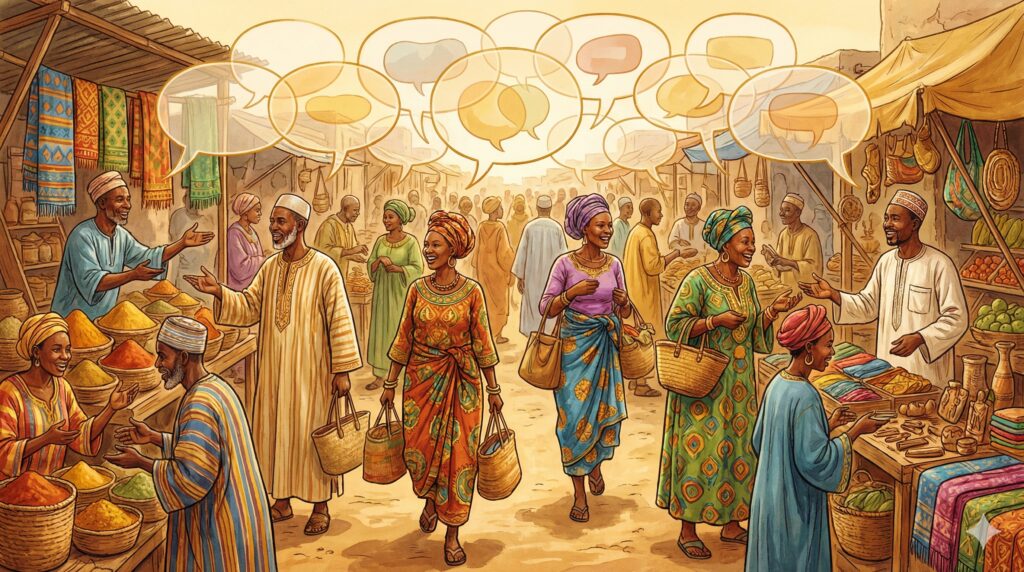
Languages of trade are bridge languages—spoken beyond one ethnic group and adopted for communication across communities. They emerge naturally where people meet: markets, ports, migration routes, religious centers, and trade corridors.
They are practical, flexible, and deeply human.
Unlike colonial languages imposed from outside, many African lingua francas grew from within, shaped by movement, commerce, and cultural exchange over centuries.
Swahili: The Language That Rode the Wind 🌊
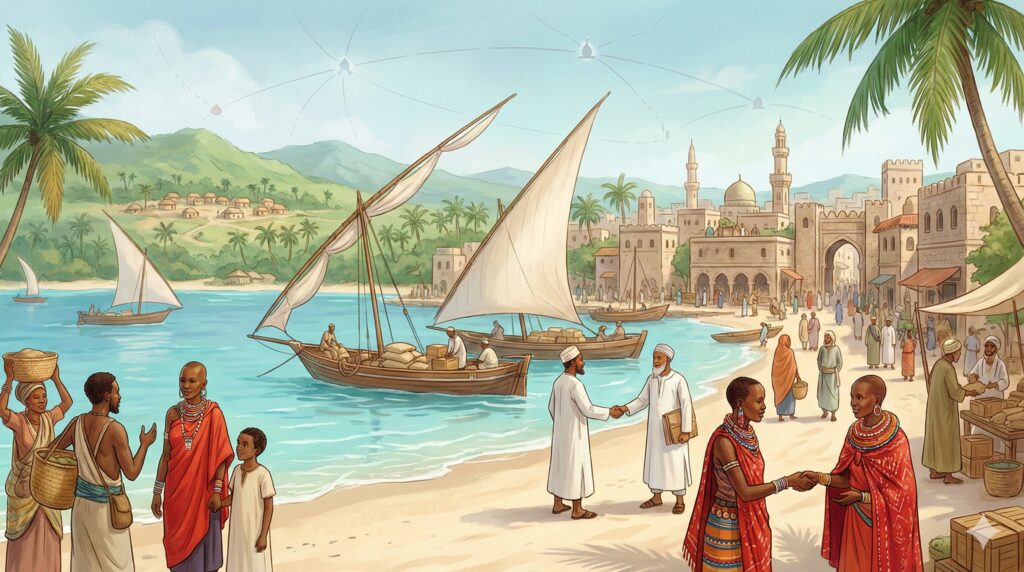
Swahili is one of Africa’s greatest linguistic success stories.
Born along the East African coast, Swahili emerged from centuries of interaction between African communities and traders from Arabia, Persia, and beyond. Structurally Bantu, but enriched with loanwords from Arabic, Persian, Portuguese, and later English, Swahili became a language of the sea—carried by dhows, merchants, and ideas.
Today, Swahili is spoken or understood by over 100 million people across Tanzania, Kenya, Uganda, Rwanda, the DRC, and beyond. It is:
- A market language
- A national language
- A diplomatic language
- A cultural identity
Most importantly, it allows people from dozens of ethnic groups to meet on equal ground.
Swahili didn’t erase local languages.
It simply gave them a shared meeting place.
Hausa: The Voice of the Sahel 🐪
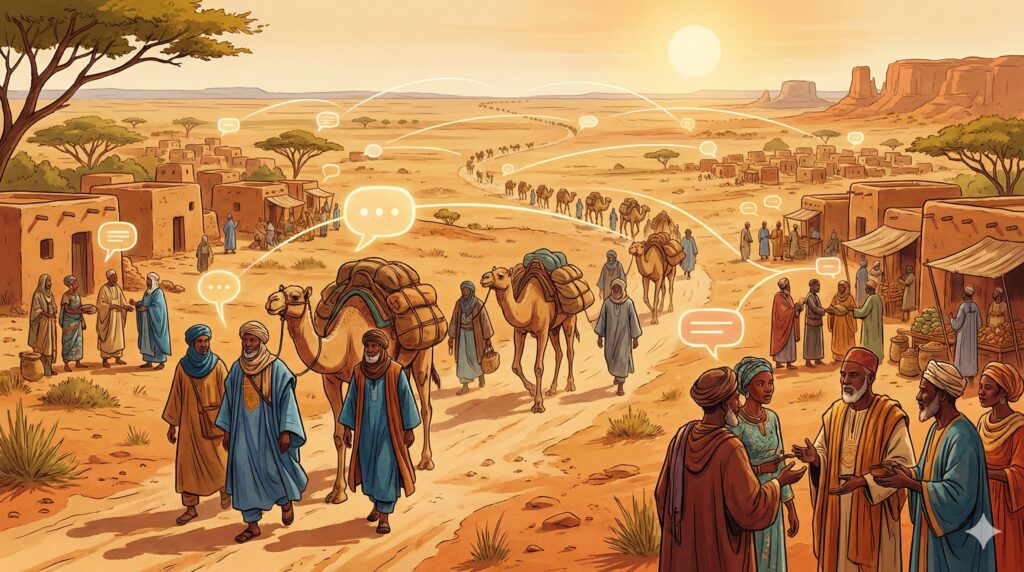
Travel west and north, and another bridge appears: Hausa.
Long before modern borders existed, Hausa-speaking traders moved across the Sahel, linking what are now Nigeria, Niger, Ghana, Chad, and Cameroon. With them traveled not just goods—but words.
Hausa became the language of:
- Trade routes
- Islamic scholarship
- Radio and storytelling
- Cross-border commerce
Today, millions speak Hausa as a first language—and millions more as a second. In bustling markets from Accra to N’Djamena, Hausa still carries negotiation, news, and everyday life.
It is proof that a language doesn’t need a passport to cross borders.
More Bridges You Might Not Notice 🌍
Swahili and Hausa are famous—but they are not alone.
Across Africa:
- Fulfulde (Fula) links pastoralist communities from Senegal to Sudan
- Arabic connects North Africa and parts of the Sahel in trade and religion
- Amharic unites diverse communities within Ethiopia
- Yoruba, Igbo, and Lingala act as regional connectors in urban and cultural spaces
Each of these languages tells the same story:
people choose what helps them understand one another.
Why This Still Matters Today
In today’s Africa—and especially in the age of AI, technology, and global collaboration—these languages are more relevant than ever.
They power:
- Cross-border business
- Media and storytelling
- Community health communication
- Data annotation and localization
- Audio, transcription, and voice technologies
Languages of trade remind us that Africa has always been connected—long before algorithms tried to catch up.
A Gentle Pause Before the Next Journey…
Languages of trade show us something profound:
Africa didn’t wait for unity to be declared.
It spoke unity into existence.
In the next post, we’ll go deeper—into “The Unique Linguistic Traits: A look at the fascinating sound of African languages, from the famous “Clicks” of southern Africa to the complexity of tonal languages.”
For now, let this linger:
When people need each other,
language finds a way.
☕ Happy Monday. Let’s keep exploring.