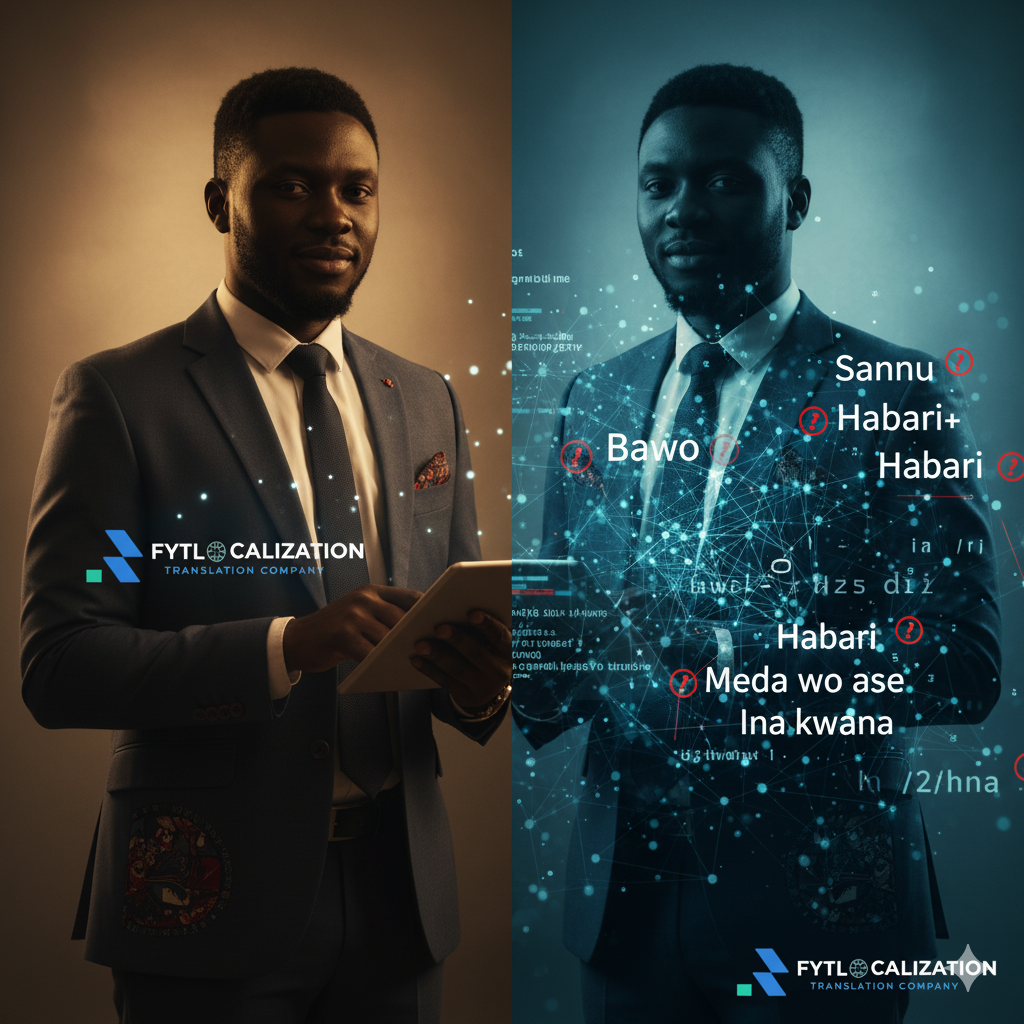
Machine translation (MT) tools like Google Translate, DeepL, and ChatGPT have revolutionized global communication. In theory, they should let anyone “speak” any language with the click of a button. In practice, however, most of the Internet’s content and training data is in English (over half of websites are English). As one observer notes, even Google’s CEO pledge that AI would make information “universally accessible” has barely affected Africa’s 2,000+ languages. Millions of Africans still find that advanced AI tools simply don’t understand or communicate in their mother tongues. In other words, when a farmer, health worker, or developer in Nairobi or Lagos tries to use an MT tool in Swahili, Yoruba, Zulu or another local language, the results are often inaccurate or useless. This article explores why this happens and what businesses, NGOs, and developers can do about it.
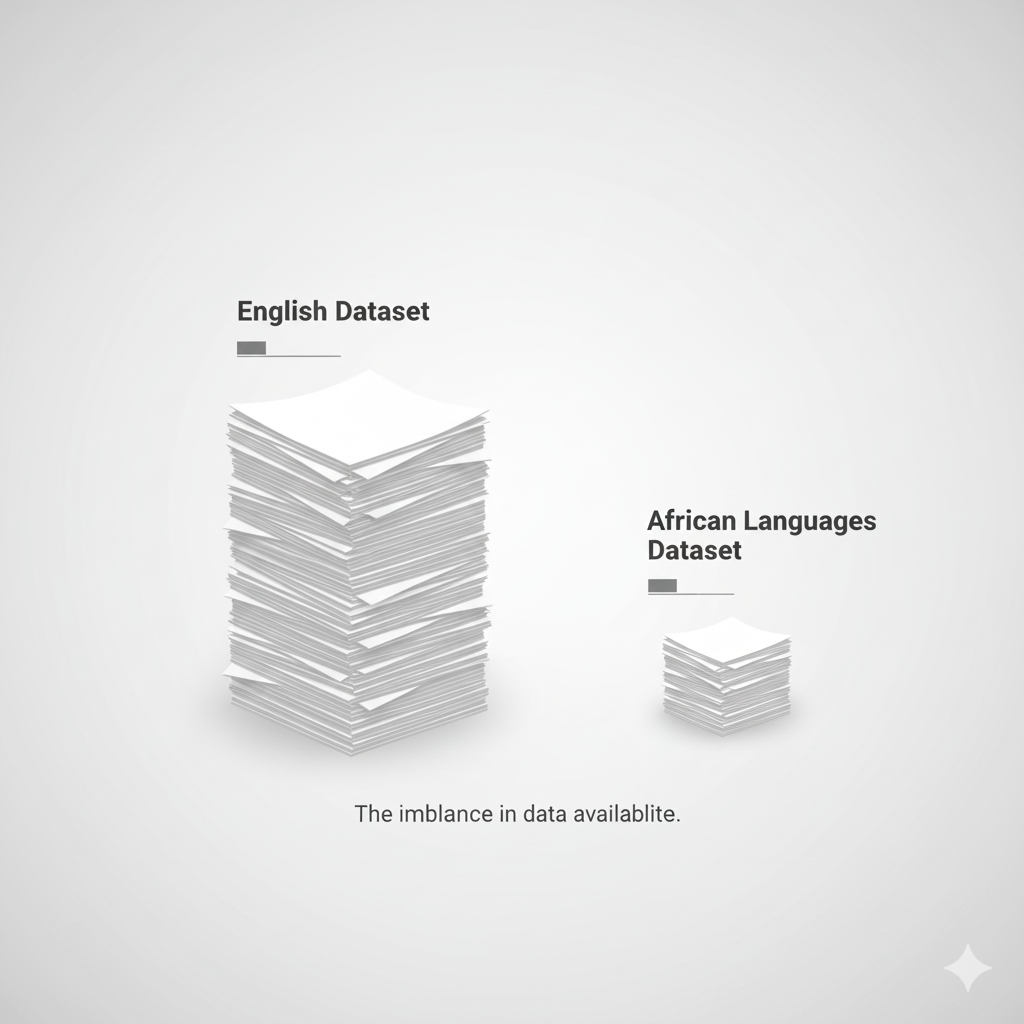
Tools like Google Translate and ChatGPT work great for English and other major languages, but often stumble on African languages due to data and design gaps. For example, a Global Voices report notes that the web has historically been dominated by English, so AI models learn mainly from English data. Meanwhile, only 10–20% of Hausa sentences are recognized by ChatGPT, and fewer still of Yoruba, Igbo or Somali. In short, these languages are treated as “low-resource” because there just isn’t enough digital text to train the models properly.
Why African Languages Are Left Behind in AI Translation
There are several reasons why popular MT tools underperform on African languages:
- Data scarcity (the “low-resource” problem): AI models rely on huge volumes of text and audio to learn a language. Most of this data comes from the Internet, where English and a few other languages dominate. As a result, African languages have far fewer books, news sites, subtitles or social media posts for models to train on. As one researcher puts it: “The lack of training data leaves AI models like ChatGPT … struggling to recognise, generate or even meaningfully ‘see’ African languages, no matter how many people speak them.”. In fact, studies show many African tongues are so underrepresented online that giants like DeepL and Amazon Translate don’t even support them. Google Translate does include major Nigerian languages (Hausa, Igbo, Yoruba, etc.), but even there the results can be unreliable due to patchy data.
- Technical and budget priorities: Tech companies tend to focus on languages with the most users and profit potential. Western languages get more research funding and product attention, while languages spoken mostly in poorer or rural communities are neglected. For example, Nigeria’s 94 million Hausa speakers see only 10–20% of their sentences recognized correctly by ChatGPT, whereas English gets near-perfect performance. Furthermore, languages that use non-Latin scripts or tonal marks (like Yoruba and Igbo) pose extra computational costs: AI tokenizes them into many parts, making processing slower and translation less reliable. These disparities reflect broader biases: one report notes that major LLM benchmarks are “based on what works for Western languages,” not African contexts.
- Cultural mismatch and design choices: Many African languages are highly context-dependent and use idioms, proverbs, or grammar that don’t exist in European languages. Yet AI systems often embed Western assumptions or slang into all languages. User interfaces for apps and websites also tend to be English- or French-only, assuming those “formal” languages cover everyone. In reality, as Good Governance Africa warns, this is a governance and design failure: most African civic tech platforms are English-only, excluding citizens who are more comfortable in local tongues like Swahili, Yoruba or isiZulu. In effect, AI and digital services end up amplifying elite voices and sidelining rural or vernacular speakers.
Real-World Failures: When Translation Goes Wrong
These systemic issues show up in practical mistranslations and misunderstandings. Here are some illustrative examples from languages like Swahili, Yoruba, Igbo, Hausa and Zulu:
- Yorùbá (Nigeria): Google Translate famously mixes up Yoruba tones and accent marks. In one case, it rendered the words ayaba and obabìnrin both as “queen,” even though ayaba means “wife of the king” (a lesser rank) and obabìnrin means “queen”. A linguist explains that GT “mixes up Yoruba words like: igbá, ìgbà, ìgbáá, and igba,” which are spelled the same but differ by tone and accent. The result is confusion of meaning. Ripples Nigeria tried Google Translate on several Yoruba proverbs and found nonsensical outputs. For example, “Bí òtá ẹnì bá pa odù òyà, wọ́n á sọ pé ọmọ elébọ́rọ̀ ló pa” (a proverb about how unlikely events seem surprising) was translated as “If one’s enemy kills the river, they will say that he killed the son of a thief,” which is utterly wrong. The correct meaning is something like “If one’s enemy kills an aged bush rat, they would say he killed a small millipede.” GT’s literal renderings completely miss the cultural context and tone cues.
- Swahili (Kenya/Tanzania): Though better resourced than many languages, Swahili still baffles machines. A Mozilla Foundation translation expert showed that Google Translate fails to handle Swahili noun classes (“ngeli”) and word forms. In one example, an English sentence was rendered with the wrong grammatical form of uvumbuzi (“innovation”) on the Swahili side. GT simply didn’t change the suffix when translating, betraying ignorance of Swahili grammar. Complex sentences fare even worse: another Swahili translator noted that when multiple conjunctions appear, Google’s output can lose the original meaning entirely. This illustrates how a Western-trained NMT system struggles with the elaborate verb conjugations and noun agreements common in African Bantu languages.
- Igbo (Nigeria): Similar problems arise in Igbo. Ripples Nigeria fed Igbo proverbs into Google Translate and saw bizarre results. One saying, roughly “The fowl said that her shouts are not so you would help her but so you could hear her,” was turned into “The rooster crowed and shouted to bring him back. He let them hear his voice.” The nuance and wordplay were completely lost. Another Igbo proverb about prayers was mangled into unrelated meal references. The root issue is the same: lack of large parallel corpora means idiomatic or poetic language is translated word-for-word, not interpreted.
- Hausa (Nigeria/Niger): Hausa, an Afro-Asiatic non-tonal language, often does better in translation because it’s related to Arabic and has been more heavily taught. In fact, linguists say Hausa translations are “near-accurate” in writing, largely because it doesn’t use tone to distinguish meaning. Even so, recognition of spoken Hausa lags behind English. TRT World reports that advanced AI tools can only recognize about 10–20% of Hausa sentences correctly. So while an English speaker might get perfect output, a Hausa speaker still needs to double-check.
- Zulu (South Africa): Zulu and related languages illustrate the data issue: Google added Zulu to Translate only in 2017, and only after decades of delay. Its new neural system cut errors, but Zulu still poses challenges because it has click consonants and noun classes that Western algorithms don’t model well. More broadly, any Bantu language with prefixes/suffixes (Swahili, Xhosa, Zulu, etc.) presents difficulties similar to Swahili’s: many word parts to align, so context can be misread.
Each of these failures stems from inadequate training data and algorithmic assumptions, not from any lack of sophistication in the language. As Ripples Nigeria notes, “Google Translate is not a credible tool for translating our indigenous languages … it doesn’t get the tonal features”. And if Google struggles, others like DeepL or Amazon Translate aren’t even trying: they simply don’t offer most African languages yet.
Unique Linguistic and Cultural Challenges
African languages differ from Indo-European ones in ways that confuse generic MT systems:
- Tone and pronunciation: Many West African languages (Yorùbá, Igbo, Twi, etc.) are tonal, meaning pitch changes the meaning of a word. Qualitative transcribers warn that “words in Yoruba, Ewe or Zulu can have totally different meanings based on tone”. A computer that ignores tone will mistranslate such words. As one Yoruba linguist explains, “Igbá, ìgbà, igba” are spelled the same but mean different things; machines tend to treat them interchangeably. Similarly, Zulu uses clicks and vowel length distinctions that common tokenizers mishandle.
- Morphology and grammar: Many African languages are agglutinative, packing multiple ideas into a single word (for example, noun classes in Swahili or verb extensions in Nguni languages). Standard neural MT often breaks text into subword tokens, but that can split a single Swahili word “kiswahili” into meaningless pieces. Mozilla’s Swahili translator points out that Google’s engine “does not understand Kiswahili word forms and how they align with different words in use”, leading to grammatical errors. In practical terms, an NMT system may drop prefixes or suffixes, altering meaning.
- Dialects and code-switching: African languages are often spoken with regional dialects or mixed with English/French (code-switching). For example, people commonly switch between Swahili and English mid-sentence, or mix Shona and English, etc. AI tools trained on formal text can’t handle this fluidity. A linguist describes transcribing African interviews as “overlapping speech, local dialects, [and] code-switching,” which tends to make AI “wave the white flag”.
- Cultural nuance and proverbs: Many African languages rely on metaphors and idioms that carry cultural meaning. A phrase might make sense to a native speaker but translate nonsensically if taken literally. For instance, Qualtranscribe notes that in Wolof “I’m just here” is a cultural way of saying “I’m doing okay,” not to be translated word-for-word. MT systems lack this background. The Yoruba and Igbo proverb examples above showcase how cultural wisdom can be mangled. In short, AI often strips away the meaning behind idioms and proverbs.
- Low written tradition: Some languages have rich oral literature but little written material. Without a standardized writing system or digital corpus (for example, many smaller Nigerian or Ugandan languages), there’s nothing for a machine to learn from. This deepens the digital divide: a South African report points out that most spoken languages got left out of AI training because they lack “sufficient digital data, annotated datasets and computational tools”.
All these factors mean that even powerful neural models trained on multi-language data do worse on African languages than on English or Chinese. Researchers warn that adding more languages without increasing data actually hurts performance per language (“curse of multilinguality”). And ironically, because English dominates training, the models often carry over English biases or idioms into other tongues. In sum, linguistic diversity in Africa is a strength—rich grammar, poetry and thought—but it’s a technical challenge for today’s AI systems.
The Consequences: Business, Aid, and Digital Inclusion at Stake
Poor translation isn’t just a theoretical problem. It has real-world impacts on business, development, and people’s daily lives:
- Economic opportunity: When companies expand in Africa, language barriers immediately come up. A fintech app, online marketplace or telecom service that only works in English will miss most of the market. Research shows over 60% of people prefer consuming content in their home language. Ignoring this means losing customers. In agriculture (a pillar of many African economies), 43% of the workforce are smallholder farmers in remote areas, but most AI tools and information services are not in Swahili, Hausa or other local languages. This worsens economic inefficiencies: farmers can’t access price updates, weather or market info they need. One analysis notes that the “digital language barrier can impede economic growth” by preventing people from accessing jobs or markets.
- Education and services: In schools and public services, learning materials or government portals that aren’t localized widen the knowledge gap. For example, African classrooms are beginning to use AI tools in education, but adoption is only ~12% partly because tools aren’t in local languages. If health ministries issue alerts or vaccination info only in English, large rural populations may be left uninformed. Likewise, NGOs delivering aid might deploy apps that try to translate vernacular terms and fail. A study of Nigerian NGOs found that poor translation of development jargon can even lead communities to misunderstand aid projects (e.g. literally translating buzzwords like “stakeholders” leaves villagers puzzled).
- Digital inclusion and rights: The broader digital divide also has a language dimension. UNESCO data show Africa has 2,000+ living languages, but Internet penetration in Sub-Saharan Africa is only about 30% (vs ~60% globally). Those few online platforms are mostly in colonial languages. As Good Governance Africa reports, civic tech (apps for corruption reporting, government services, etc.) is overwhelmingly English- or French-only. This “language inequity in the digital space” leads to diminished civic participation and mistrust. For example, Kenyan apps struggle to reach monolingual Swahili speakers, and Nigeria’s voter education tools often exclude Hausa, Igbo and Yoruba, causing “information asymmetries”. In effect, exclusionary translation technology can mute African voices just as surely as censorship.
In short, machine translation failures exacerbate existing inequalities. They make it harder for local businesses to reach customers, for educators and aid groups to connect with communities, and for citizens to engage with digital services. The cumulative impact is that large swaths of the African population remain on the wrong side of the global tech revolution.
Solutions: Bridging the Language Gap with Data, People, and Design

The good news is that this problem is fixable — but it requires concerted effort. Here are practical strategies being advocated and implemented:
- Community-driven data collection: Involve native speakers at every step. Rather than scraping web text (which is sparse), projects are going into communities. For example, the African Next Voices initiative (funded by Gates Foundation) has linguists travel to Nigerian, Kenyan and South African villages, show people pictures, and record their spoken descriptions in languages like Hausa, Igbo, Yoruba, Swahili, Luo and Zulu. These 9,000+ hours of recorded speech data are then released openly for model training. The key is methodical, community-driven collection. Similarly, the Global Voices report on a U.S. AI project emphasizes “community involvement and responsible data collection” so that the voices of marginalized groups are captured authentically. In practice, this means working with local universities, NGOs and volunteers who understand cultural nuance. Grassroots groups like Masakhane, GhanaNLP, and Lesan.ai exemplify this approach: they are African-led efforts to build datasets and models for local languages. The Brookings Institution highlights these initiatives as models for “AI by Africans, for Africans,” where building local expertise ensures communities own the technology and benefit from it.
To truly improve translation, native speakers must build the data. Here, African Next Voices project leaders gather with community members to record language data (photo: African Next Voices). Their goal is open, authentic corpora that MT developers can use.
- Building language resources: Parallel to collecting speech, we need written corpora, dictionaries, and annotations. Projects like the African Universal Dependencies (UD) treebanks are doing this by creating annotated text datasets in languages like Zulu, Hausa, Yoruba, Luganda and Wolof. Higher education and tech companies also play a role: Google recently granted $1M each to African AI institutes (Pretoria’s AfriDSAI and Wits MIND in South Africa) to fund NLP research and resource creation. Open-source efforts help too: Mozilla’s Common Voice platform crowdsources voice recordings in many African languages. All these resources feed back into translation models. In other words, more and better data = better AI. Encouragingly, there are now textbooks, news articles and even children’s stories being written or collected in African languages specifically for digitization.
- Hybrid AI+Human workflows: Even with better AI, human oversight remains essential. The legal sector in Africa (for example) now often uses a two-step “dual-pass” approach: first run documents through machine translation for speed, then have a local language expert review and correct the output. This maximizes efficiency but catches errors, idioms, and context that machines miss. More broadly, companies should incorporate bilingual or multilingual editors into their localization teams. AI can handle routine translation tasks (and thus reduce costs), but nuanced content (marketing copy, legal text, medical info) should be vetted by humans familiar with local usage. In development work, NGOs might use tools like Google Translate for raw translation but always involve local translators to ensure accuracy. These hybrid workflows build trust: local experts see the technology as a tool in their hands, not a replacement for them.
- Inclusive design and UX: It’s not enough to translate content; products and interfaces should be designed for multilingual use from the start. As one UX analyst points out, “none of [advanced AI features] matter if the user can’t interact comfortably in their own language”. This means offering UI text, voice prompts, help centers and prompts in local languages. For example, a Nigerian payment app that supports Yoruba, Hausa and Igbo alongside English dramatically increases user confidence and adoption. In rural areas, even supporting spoken language input and output (voice AI or SMS) can be crucial where literacy is limited. Google’s AI Community Lab in Accra (see image below) is an example of putting resources into local-language UX research. Simply put, products must “speak like you” to Africans in order to gain trust.
Google’s Accra AI lab (photo: Google) supports developers building language tools for Africa. Businesses and NGOs should similarly invest in local-language interfaces (text, voice or SMS) early in design. As one expert says, supporting the “heart language of your audience” is the difference between a useful tool and a trusted companion.
- Policy and funding support: Governments and institutions can help by funding language tech and requiring localization. Some African countries are starting to mandate services in local languages (echoing post-colonial language policies). International donors and development banks could similarly tie digital projects to language inclusion. Legal frameworks are also evolving: translators’ labor and data ownership are being debated. The Brookings report cautions that open datasets must come with safeguards (so that local communities retain credit and benefit).
Taken together, these steps – data, people, process, design – form a roadmap. We’re already seeing progress: African-led innovations like Lelapa AI’s InkubaLM (a small language model for local languages) and Google’s funding of African NLP conferences are moving the needle. Crucially, local involvement underpins all solutions. As one Brookings analyst notes, the real breakthrough comes when “local knowledge and expertise are leveraged” rather than exploited
Invest in Language Inclusion Now
For businesses, NGOs and developers, the imperative is clear: language inclusion is not optional; it’s smart strategy and social responsibility.
- For businesses: A multilingual approach can unlock new markets. In fact, over 60% of consumers say they prefer content in their native language. Ignoring local languages means leaving customers on the table. Early adopters will stand out and build loyalty. (As one designer put it: “Local language support is not just a UX feature — it’s a growth multiplier”.) Start-ups like Awarri and CodeVast are already proof: they embed Swahili, Yoruba and other languages into AI products to serve millions more users. Even for global brands, tailoring content (and marketing) in African languages will pay dividends.
- For NGOs and development agencies: If your mission involves education, health, farming or civic engagement, you must meet people in their languages. Funding translation is not an afterthought; it’s fundamental. Aid instructions, data-collection apps, and chatbots must all include local languages or risk misunderstanding. Investment in language technology here is investment in outcomes. For example, farmers using Crop2Cash get real-time advice via voice in their own languages, directly improving yields and livelihoods.
- For African developers and researchers: Lead the way. You understand your languages and contexts better than anyone. Collaborate on open datasets (like Masakhane’s community) and share models. Advocate in your companies for multilingual design. Teach AI tools your languages, script, idioms – and guide them to do the same. Your expertise is the missing ingredient that can make AI truly serve Africa.
The bottom line: digital inclusion is inseparable from linguistic inclusion. As one AI advocate said, if tech can’t “speak the heart language of your audience”, it’s already lost half the battle. By investing time and resources into African languages today, tech leaders can not only access new markets and communities but also help preserve culture and knowledge. In a continent as multilingual as Africa, letting AI tools remain monolingual is a self-inflicted blind spot. It’s time for businesses, NGOs and technologists to fix that – and ensure the next generation of AI truly works for everyone.
👉 Ready to audit your translations or pilot a hybrid localization project? Contact FYTLOCALIZATION for an assessment.