
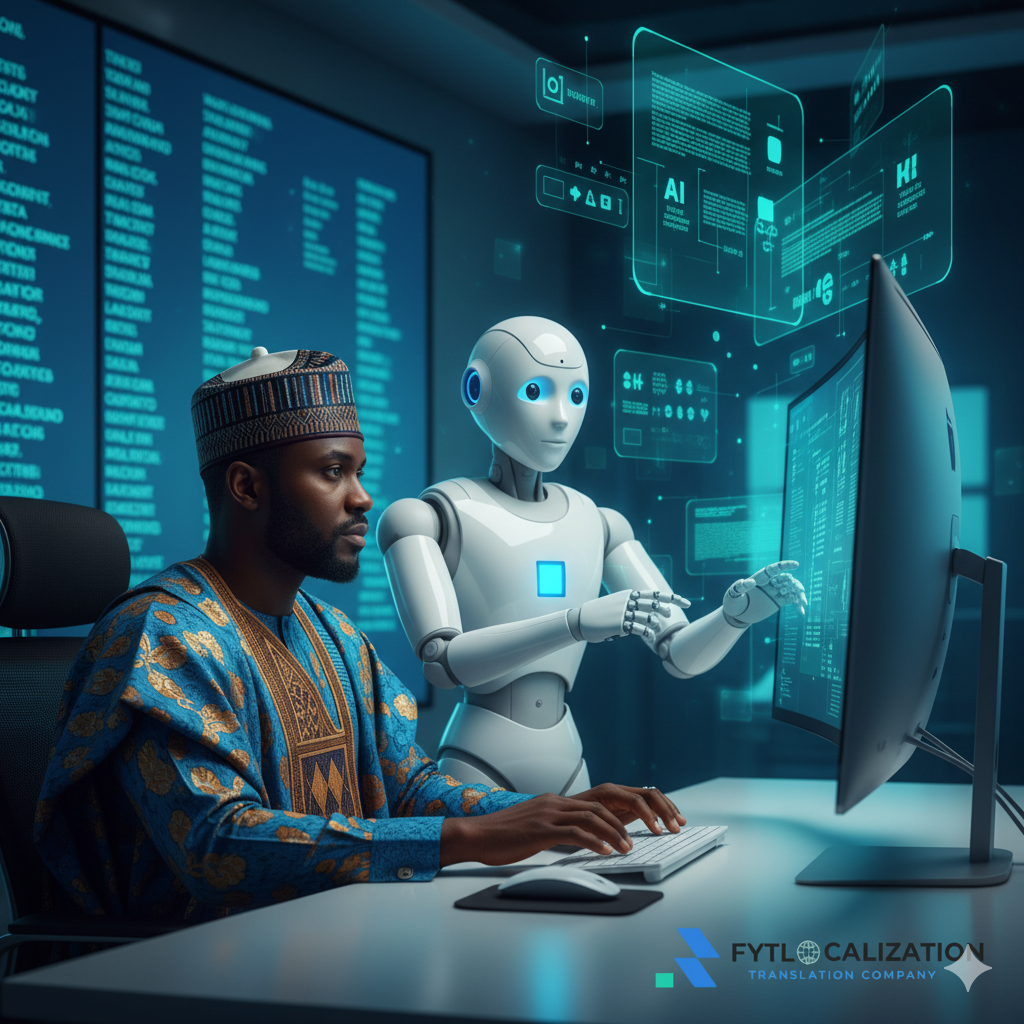
Introduction — why motion changes everything
Video and voice are no longer optional channels — they are the primary way people learn, shop, and decide. That change matters for localization: translating a static webpage is one thing; making a short video, a webinar, or a voice message meaningful across languages is another. Real-time video and voice translation now allow brands to speak directly to viewers in their own language, in the moment. But unlocking that potential requires more than fast machines — it requires workflows that respect culture, tone, and context. This is why the industry is moving from “translate and post” to localization in motion.
Audiences expect immediacy. When someone watches a product demo, attends an online training, or follows a live stream, delays in understanding create friction — and friction kills engagement. Real-time speech-to-text and instant dubbing solve the timing problem: captions appear as words are spoken, or voice overlays convey the message in the viewer’s language with minimal lag. That technical capability is transforming distribution: marketing videos become global in seconds, training webinars scale to new regions without weeks of post-production, and customer support can address issues across languages in near real time. Because speed unlocks reach, brands that adopt these tools gain the first-mover advantage in new markets.
However, to fully understand this transformation, we must explore how AI integrates into the localization workflow — from translation memory tools and neural engines to cultural context adaptation. Let’s dive deeper into the ways AI in the localization industry is changing how we communicate across borders.
AI-Driven Translation: speed, scale, and smarter drafts

AI has dramatically reduced the time it takes to get a first usable translation. Neural Machine Translation (NMT) engines now produce far more fluent, context-aware drafts than earlier statistical models. For localization teams, this means routine, high-volume tasks — product catalogs, FAQs, bulk subtitles — can be drafted automatically and pushed into workflows in minutes instead of days.
But speed is only the first benefit. Modern AI engines provide:
- Consistent terminology when paired with glossaries;
- Terminology suggestions that speed up glossary building;
- Initial tone alignment using fine-tuned models trained on industry-specific corpora.
Example can be seen in a pan-African e-commerce brand which uses NMT to auto-draft 10,000 SKU descriptions in three languages overnight. Human editors then apply brand voice and regional variants, turning the NMT output into market-ready listings within 48 hours. Following this, Localization in motion seems more intresting .
This raw speed fuels the rest of the localization pipeline — yet, as we’ll see next, speed without sensitivity can cause costly errors unless human expertise is applied.
Contextual Understanding: why raw machine output still needs culture
Machines are great at pattern recognition; humans are great at meaning. In African markets especially, context is everything: idioms, honorifics, ritual expressions and even measurement conventions differ across regions. AI outputs a literal or statistically probable version of a sentence — but it cannot reliably sense whether a phrase is culturally appropriate, emotionally resonant, or legally safe.
Consider a health advisory that uses a metaphor common in one language but taboo in another. An unreviewed AI draft can unintentionally offend or confuse, undoing trust that took years to build.
That’s why the modern solution is a partnership — AI for draft creation, humans for cultural validation. The next section explains how to operationalize that partnership.
Human + AI Partnership: practical roles and responsibilities
The productive model is a hybrid: AI handles volume, humans handle nuance. But successful teams define who does what clearly:
- AI (automated tasks): draft translations, automatic speech recognition (ASR) transcripts, alignment of subtitles, glossary suggestion, and repetitive QA checks (placeholders, number formats).
- Human linguists: cultural adaptation, tone & register adjustment, idiom selection, legal/ethical review, and final sign-off.
- Localization engineers/project managers: connect systems (TMS, CMS, video platforms), automate handoffs, and ensure version control.
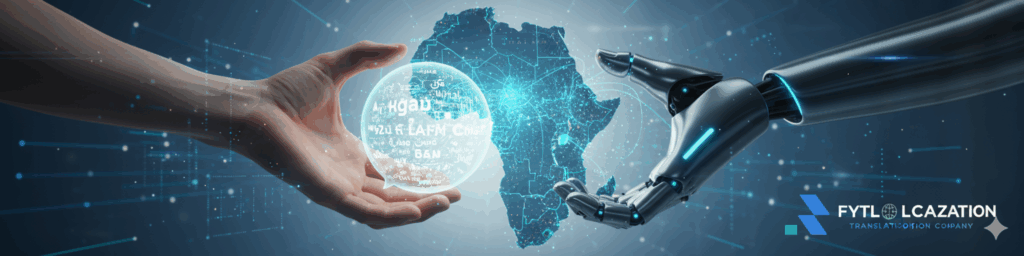
For a webinar localization: ASR produces live captions → AI translates the captions in real time → remote human interpreters post-edit or moderate in parallel → captions are synchronized and delivered to end viewers.
This collaboration doubles down on the strengths of both sides: AI reduces time-to-draft; humans preserve trust and brand voice.
A practical hybrid workflow for real-time localization
A repeatable workflow keeps quality predictable even when velocity increases. Here’s a practical sequence that many teams use and that FYTLOCALIZATION applies:
- Pre-mapping & glossary building: identify critical terms, tone guides, and forbidden phrases for each target audience.
- AI capture: use speech-to-text (ASR) or live translation engines to generate a near-instant transcript/draft.
- Human post-editing or live interpretation: native linguists refine phrasing, adjust cultural metaphors, and correct register — either as post-editors for recorded content or as remote live interpreters for events.
- Quality assurance & micro-testing: quick in-market checks (sample audiences, on-the-ground reviewers) validate effectiveness before wide release.
- Analytics & iteration: measure engagement (view time, conversion, comprehension) to continuously improve models and style guides.
Short success story at FYTLocalization
Empowering E-Commerce in Nigeria’s North
A Lagos-based fashion e-commerce brand wanted to reach Northern Nigeria but struggled with low engagement in their Hausa-speaking audience.
We piloted a smart localization workflow — AI provided a first translation draft for product descriptions, while our Hausa linguists refined tone, idioms, and cultural relevance.
Within two months, engagement rose sharply. The Hausa-language campaign saw a 27% increase in conversions and customer feedback often mentioned “feeling understood.”
This example reminded us that AI delivers speed, but humans deliver connection.
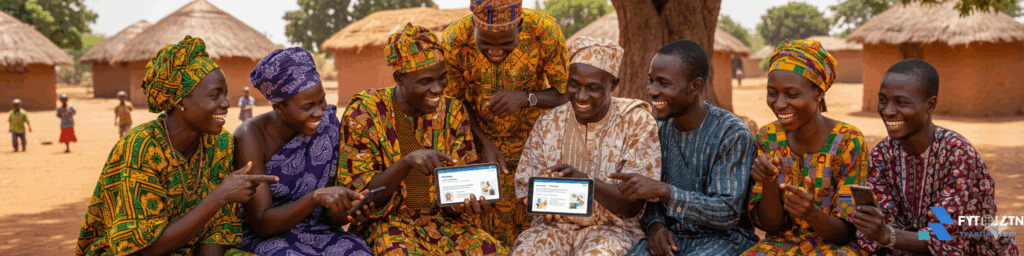
Building Trust Across Borders
A Kenyan health-tech startup approached us during their expansion into Francophone Africa.
We implemented a dual-translation model — AI handled quick French translations for technical documents, and our native speakers reviewed, ensuring accuracy and empathy in tone.
Within weeks, their client onboarding time dropped by 40%, and customer satisfaction rose.
When they said, “Now our product sounds like us — just in French,” we knew localization had done its job.
🧭 Conclusion: Where Technology Meets Culture
AI is transforming the way we approach translation in Africa. It accelerates workflows, reduces repetitive tasks, and opens new doors for accessibility.
But what defines success in our industry isn’t speed — it’s understanding.
At FYTLOCALIZATION, we don’t see AI as a replacement for human translators; we see it as a powerful collaborator. Machines process; people perceive. Together, they bring meaning to life.
That’s why our mission remains clear:
To connect Africa — and the world — through language that feels human, even when powered by technology.
So, as brands across Africa race to go digital, one truth stands out —
Those who localize with both intelligence and empathy will not just grow faster; they’ll grow deeper into the hearts of their audiences.

Contact us for a free localization assessment: fytlocalization.com
Tagline: Connecting the World Through Language