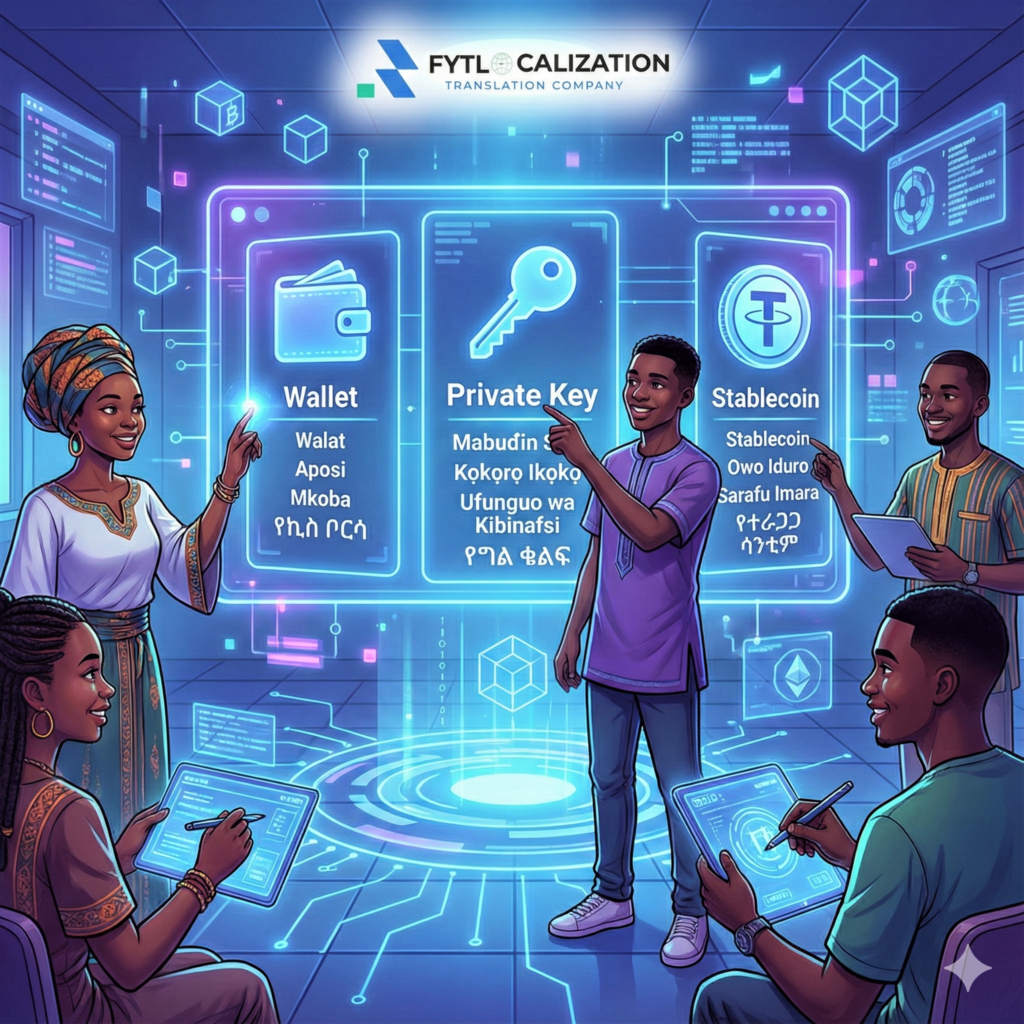
Web3 promises a more open, decentralized internet. Yet one invisible barrier keeps many people from joining that future: language. Technical terms like decentralization, wallets, gas fees, and stablecoins are hard enough in English; they become confusing, misleading, or meaningless when communicated poorly or only in English.
If Web3 is going to reach its full potential, education must be multilingual not an afterthought. Teaching blockchain concepts in local languages turns confusion into comprehension, curiosity into participation, and passive audiences into active contributors.
Why language matters more than many teams expect
Technology alone doesn’t create adoption; understanding does. A person who understands how a wallet works and why private keys matter is far more likely to use one safely. When that explanation happens in a person’s first language, comprehension rises sharply and so does trust.
Consider three practical consequences of language barriers:
- Lower participation in governance. If proposals and voting instructions are only in English, many community members cannot reasonably evaluate or vote.
- Security risk. Misunderstood wallet instructions and transaction prompts lead to user error and exploitability.
- Slower developer growth. Tutorials and documentation in English only reduce the pipeline of local builders and contributors.
The fix is simple in concept: bring education to the user’s language and context. The impact is profound.
Real-world examples where local-language education moved the needle
You don’t need theoretical arguments — there are practical precedents:
- Localized onboarding drives adoption: Several projects that translated onboarding guides and short explainer videos into regional languages saw faster on-ramp rates in those markets. For instance, when a payments-focused blockchain localized its onboarding material into Swahili and Hausa, community-led meetups and wallets onboarding in East and West Africa accelerated notably.
- Developer outreach in local languages builds ecosystems: Initiatives that provide developer tutorials and hackathon materials in Portuguese, Spanish, and Bahasa Indonesia tend to generate more local apps and integrations because learners can grasp core concepts faster.
- Safety & fraud prevention: Projects that published simple, illustrated wallet-safety materials in local languages reported fewer help-desk tickets related to basic mistakes, a proxy for clearer understanding.
These are not isolated wins they show a replicable pattern: translation + contextual education = faster, safer adoption.
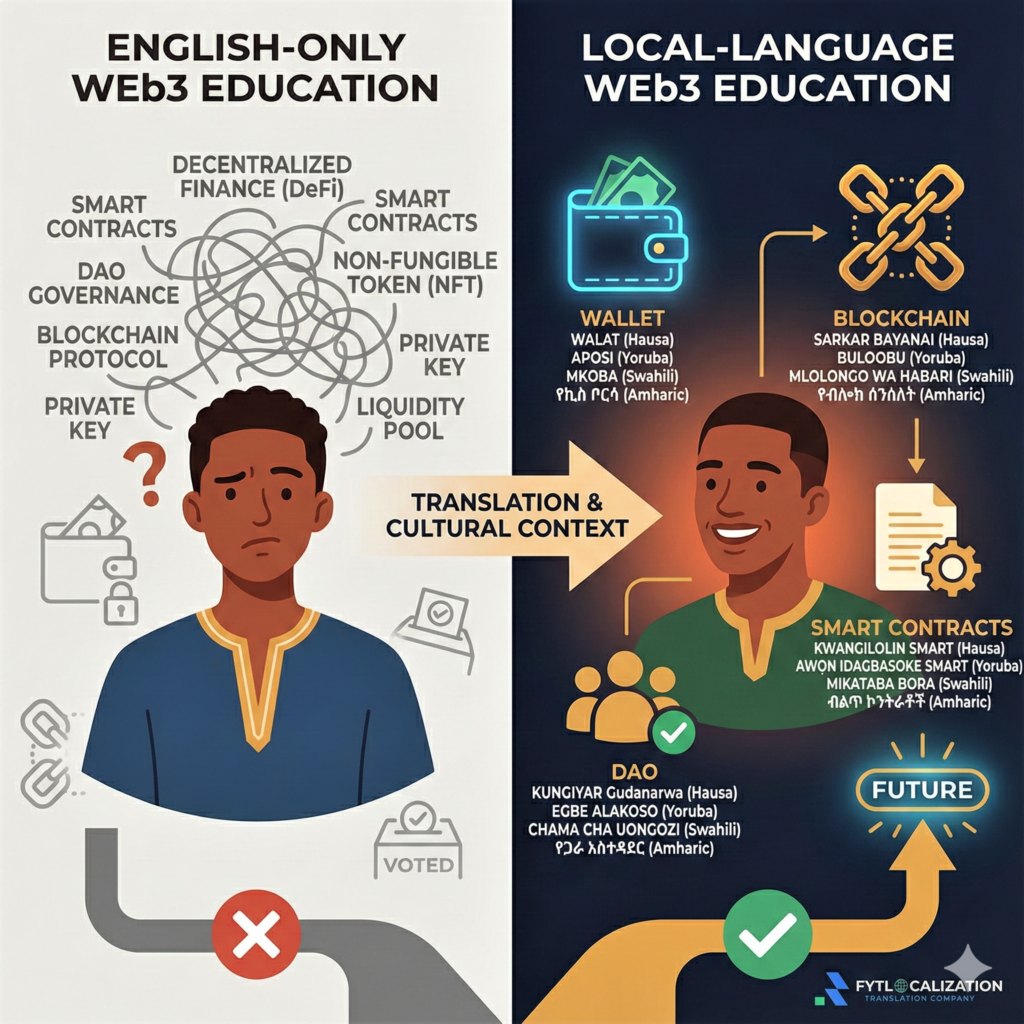
What “local-language blockchain education” actually looks like
Localization is more than word-for-word translation. Effective local-language education includes:
- Terminology alignment: Identify terms that don’t translate directly and create standard, locally accepted equivalents.
- Cultural framing: Use metaphors and examples that make sense locally (e.g., comparing liquidity pools to community savings groups where appropriate).
- Multimodal formats: Short videos, voice recordings, illustrated guides, interactive workshops, and voice-first materials for low-literacy areas.
- Practical labs: Local-language walkthroughs for wallets, transactions, and staking that let users practice in safe test environments.
- Community-led trainers: Train local ambassadors who can teach, moderate, and translate in live discussions.
That mix — terminology, cultural framing, formats, labs, and trainers — makes education actionable.
Practical steps to design local-language blockchain education
If you’re building this for your project or community, follow these steps:
- Map priority languages and audiences. Focus on languages used by active or targeted communities (developers, validators, everyday users).
- Develop a core glossary. Create approved translations for key terms and publish them publicly so community members use consistent language.
- Choose the right formats. Use short videos and audio for low-literacy audiences; interactive docs and code samples for builders.
- Pilot locally, iterate quickly. Run small workshops, gather feedback, and refine wording and examples.
- Empower local educators. Recruit and fund local community leads who can host meetups, spaces, and office hours.
- Measure learning and adoption. Track comprehension (surveys), support ticket types, onboarding completion rates, and governance turnout by language group.
These are practical actions any project can start this week.

How to measure success
Localization work is an investment; measure it with metrics that matter:
- Onboarding completion rate by language
- Decrease in “how-to” support tickets after localized materials launch
- Participation in governance (voter turnout, proposal engagement) by language group
- Retention and active usage among users who completed localized training
- Number of local builds / contributions following developer education programs
If you see improvements in those metrics after launching localized education, you’ve created measurable impact.
Common challenges and how to avoid them
Challenge: Literal translations that create new confusion.
Fix: Use native speakers with Web3 knowledge to craft terminology and explanations.
Challenge: High volume of dialects and regional variations.
Fix: Prioritize high-impact languages first; use community ambassadors to adapt materials for dialects.
Challenge: Resource constraints (time, budget).
Fix: Start with concise, high-impact assets, one short explainer video and one illustrated quick-start guide per language and expand based on results.
Challenge: Misinformation spread in local channels.
Fix: Work with trusted local partners and moderators, publish verified FAQ sheets and official community channels in local languages.
Short checklist you can use right now
- Identify top 3 local languages for your community.
- Build a one-page glossary for core blockchain terms in each language.
- Create 1 short video (2–3 minutes) explaining wallets and keys in each language.
- Run one pilot workshop with local ambassadors and collect feedback.
- Track onboarding completion and support ticket types for 30 days post-launch.
Closing thought — localization is adoption infrastructure
Blockchain technology can be global by design, but it will be local by practice. Education in local languages is not PR or a box to tick, it is infrastructure: the communications layer that connects global protocols to local people. If you want sustainable growth, start by ensuring people can actually understand what you’re building.
If you’d like, Fytlocalization can help you map priority languages, build glossaries, create localized learning content, and run pilot workshops. Let’s make blockchain education accessible — one language at a time.