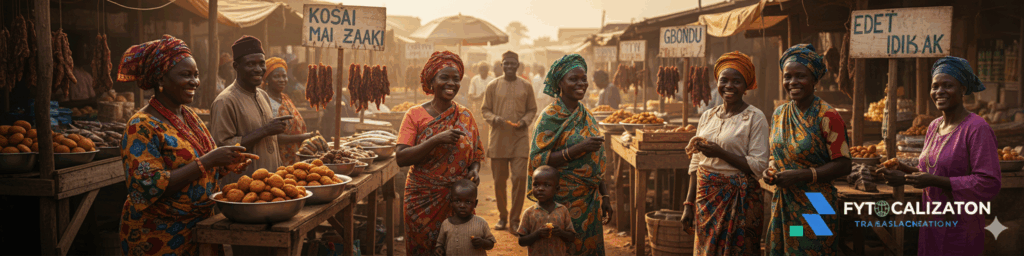
Why Localization Is the Missing Link in Web3 Community Growth
Breaking language barriers to build stronger, inclusive, and truly global blockchain communities. Introduction: Web3 Promises Global Access — But Language Still Holds Millions Back. Web3 has positioned itself as a decentralized, borderless ecosystem where anyone, anywhere, can participate.But there’s one barrier the blockchain industry still struggles to overcome: 👉 Language. From onboarding to governance, most Web3 projects still communicate in English — despite the fact that over 70% of global Web3 users are non-native English speakers. This means thousands of potential contributors, builders, voters, stakers, educators, moderators, and investors are left behind simply because the language isn’t accessible. Localization is not just a “nice to have.”It is the missing link preventing Web3 communities from reaching their true global scale. 1. Web3 Communities Grow Through Participation — And Participation Needs Understanding Community is the backbone of Web3.But participation only happens when users understand: If this information is only available in one language, your global community becomes unintentionally exclusive. Localization democratizes access. It ensures a Web3 user in Nairobi, Lagos, Accra, Dakar, São Paulo, Jakarta, Mumbai, or Ankara has the same quality of information as someone in San Francisco or London. Example: One multilingual governance update could transform engagement overnight. 2. Localization Builds Trust — A Critical Currency in Web3 The Web3 world moves fast — but scams move even faster.Users trust platforms that communicate clearly and in their language. Localized communication shows users that: Real example from the industry: Projects like Polygon, Solana, Near Protocol, and Ethereum Foundation now invest heavily in localized documentation and translations for Asia, Africa, and LATAM — because trust increases when understanding increases. Localization doesn’t just translate words.It translates intent, value, and credibility. 3. Onboarding Workshops Become 10× More Effective with Localization Most Web3 onboarding happens through: But when these initiatives happen only in English, adoption rates drop sharply. Localization allows projects to conduct onboarding in: This is how Web3 becomes truly global — not in theory, but in practice. Example: A blockchain startup launches a stablecoin onboarding campaign in Kenya.The moment its guide is translated into Swahili, the adoption rate triples within weeks.Not because the product changed — but because the message became clear. 4. Governance Discussions Become More Inclusive DAOs pride themselves on decentralized participation.But if governance proposals, voting instructions, and community discussions are not localized, decentralization becomes unequal. Localization enables: A DAO is only as strong as the clarity of its communication. When thousands can finally understand governance proposals in their own language, community power multiplies. 5. Localization Strengthens Knowledge-Sharing Spaces Web3 thrives on shared knowledge.But tutorials, user guides, GitHub documentation, and safety instructions are still heavily English-centric. Localized knowledge-sharing creates: Case example: For instance, African and LATAM developer communities grew faster when platforms like Binance, Cardano, and Celo localized training programs into local languages, especially for university and accelerator workshops. When people understand better, they build better. 6. Localization Helps Prevent Risk, Scams, and Misinterpretation Many Web3 users lose funds due to: Localization ensures that critical safety instructions are clear for every community member — not just English speakers. This alone can prevent millions in user losses. 7. Localization Scales Web3 Faster Than Marketing Alone Organic Web3 growth doesn’t happen through ads.It happens through: Localization amplifies all of this. Projects that invest in localization see: ✔ Higher conversion rates✔ Higher retention✔ Higher community activity✔ Fewer user misunderstandings✔ More meaningful global participation In Web3, the most inclusive community wins. Conclusion: Web3’s Future Is Multilingual — Or It Isn’t Global at All Community is the engine of Web3.But language is the doorway into that community. If people cannot access your message, understand your governance, or cannot read your documentation, they wouldn’t be able to join your movement, participate and build with you effectively. Localization isn’t a side task.It is a strategic accelerator for: For Web3 ecosystems aiming for true scale, localization is the missing link — and the key to unlocking global participation. Ready to scale your Web3 project globally?Let FYTLocalization bridge your community, accelerate adoption, and unlock true multilingual growth.Partner with us today — and make your blockchain project understood, accessible, and unstoppable.
Why Localization Is the Missing Link in Web3 Community Growth Read Post »